
Lest We Forget
The ground beneath a site can carry the legacy of past mining and other geological hazards. Understanding those conditions is central to geotechnical engineering, but history also provides stark reminders of what can happen when the ground fails. This page remembers people whose lives were lost in events connected with mining and ground instability, and reflects on why careful investigation and investment in geotechnical matters continue to matter.
In memory of the 144 people (116 children) killed at Pantglas, Aberfan on 21st October, 1966; and Ludovic Berry, lost to Low Lane No. 7 Shaft , Brookside, Bickershaw, while still on Dorothy’s engine Plate in 1945; and James Condliff (aged 12) buried alive at Woodshutt’s Colliery, Kidsgrove in May 1849.
Aberfan
October 1966
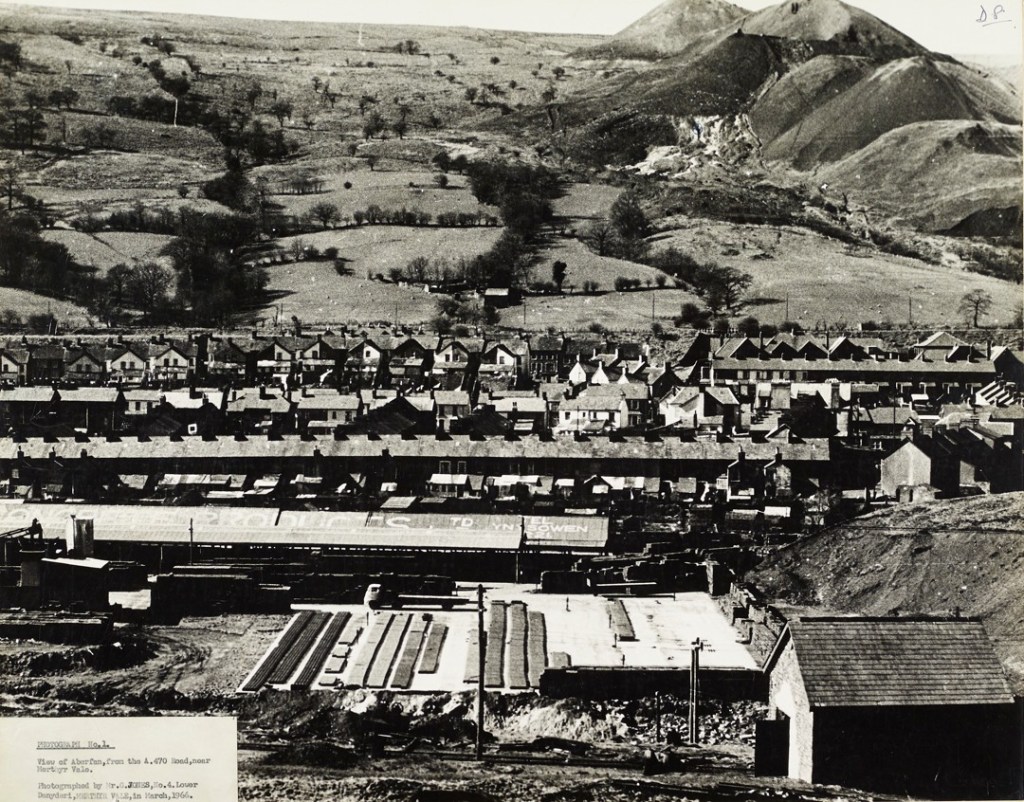
October 2026 marks the 60th anniversary of the Aberfan disaster, in which 144 people, including 116 children, lost their lives when a colliery spoil tip collapsed onto Pantglas Junior School and surrounding homes.
The image below, presented at the Aberfan Inquiry, shows the spoil tips on the hillside above the school. These tips were enormous accumulations of waste material from the local coal mines. Water was a critical issue because, once saturated, this loose material could become dangerously unstable.
Following the disaster, Lord Robens, Chairman of the National Coal Board, suggested that an previously unknown natural spring had caused the tip to become saturated:
“…a natural spring which would be completely unknown… has been pouring its water into the centre of the tip and produced… a water bomb.”
BBC interview, quoted in Austin (1967), Aberfan – The Story of a Disaster.
However, the subsequent inquiry found that springs and watercourses on the hillside were identifiable before the disaster, while earlier movements of the tips had also demonstrated the risks of instability. The visible evidence of water in the photograph makes the suggestion that the problem was unknowable particularly troubling.
Aberfan led to major changes in the management and regulation of spoil tips, including the Mines and Quarries (Tips) Act 1969. Later reclamation and tip-clearance programmes across Wales also provided formative experience for a generation of geotechnical engineers.
The disaster remains a powerful reminder of the consequences when geological and engineering warning signs are not properly recognised and acted upon.
Platt Bridge, Wigan
1945
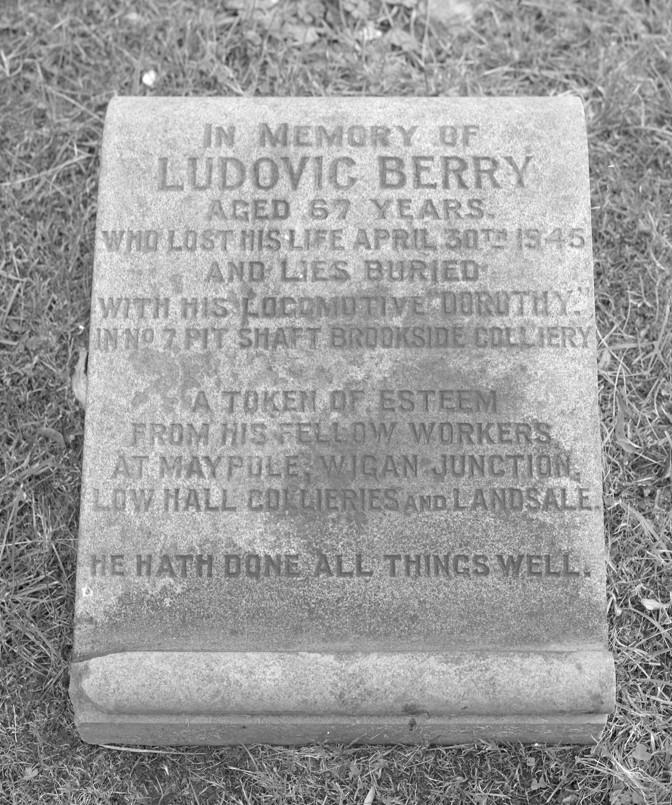
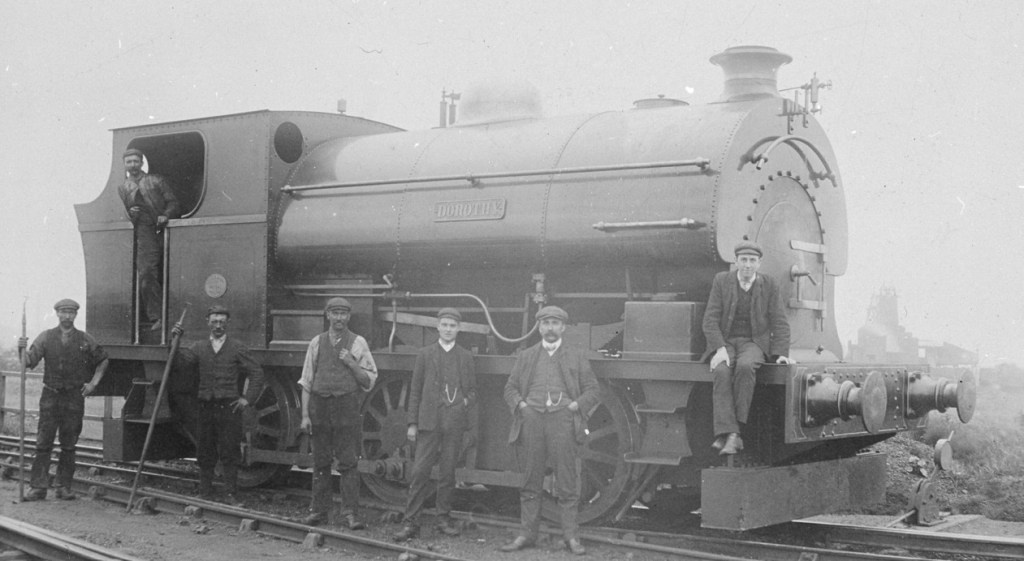
On 30 April 1945, engine driver Ludovic Berry was shunting loaded coal wagons at Bickershaw Lane sidings, between Abram and Platt Bridge. His locomotive, known as Dolly, was pushing 13 wagons into No. 8 siding when a large hole opened beneath the railway line.
Brakeman John Ward saw the danger and signalled for Ludovic to stop, but as the brakes were applied the unsupported tracks buckled. The wagons began to fall into the opening, pulling the locomotive with them. Ward and another brakeman shouted for Ludovic to jump clear, but he remained in the cab, apparently trying to stop the train. Within seconds, the wagons and locomotive had disappeared into the ground.
When the dust cleared, part of Dolly could be seen around 100 feet below the surface. Ludovic’s body and the locomotive were never recovered.
The inquest found that the collapse had occurred above the former shaft of the New Zealand Pit, also known as No. 7 Brookside Colliery. The shaft had been filled in 1932, but the ground failed thirteen years later. Old mine workings and recent heavy rainfall were considered possible contributing factors.
Based on “For love of Dolly” by Geoffrey Shryhane, from Window on Wigan, reproduced on Wigan World.
Kidsgrove
1849
Source: Staffordshire Advertiser, 12 May 1849
“A singular accident, the consequence of mining operations, has occurred on the Woodshuts Colliery estate, belonging to R. E. Heathcote, Esq., and within 200 yards of the Harecastle station of the North Staffordshire Railway.
The mine at the Woodshutts colliery being what is termed a “rearing” one, that is, the seams of coal, instead of lying horizontally, stand nearly perpendicular to the surface, which in some spots had naturally sunk the ground several yards, in consequence of the coal having being got underneath.
On the afternoon of Thursday, the 3rd inst., a lad of the name James Condliff, about 12 years of age, was actually entombed alive through one of these places sinking in. The lad lived with his parents in the neighbourhood, and having carried dinner to his father, who is a boatman, he passed the colliery on his way home, and he went into one of the hollows referred to for the purpose of picking coal. Here he was joined by two other lads, who perceiving some tremulous motion of the earth came out and desired Condliff to do the same, but he replied that he would first get a piece of coal he was digging at. The two lads then left the place for a few minutes, and on their return they were alarmed by seeing an opening in the ground, and from which their unfortunate companion called out that he could see them, and he had stopped himself from sinking.
In a moment, however, he shouted “I’m going again, Isaac: run and tell your father to get a rope and get me out.” The lads ran to the adjoining engine-house, about 120 yards distant, and James Stubbs, one of the men employed on the works hastened to the spot, but was totally unable to extricate the lad from his frightful situation: indeed he was sunk too low to be even seen, and as his voice was not heard, it was supposed he was drawn down and completely covered by the sinking earth.
The ground surrounding the spot was still on the move towards the centre, until the gulph was so completely closed at a few yards depth as to destroy all hope of extricating the poor lad alive from the vortex; but the most praiseworthy exertions were immediately used by Mr. Rigby, the agent on the estate, and no expense was spared to recover the body.
A number of men were set to work and continued their labours night and day until Tuesday evening, when having sunk a shaft about 16 yards without meeting the body, and further search being attended with considerable personal risk to the men engaged it was deemed advisable to desist. Some idea of the character of the casualty may be inferred from the fact that a portion of an adjacent hedge was met down with the recently sunk shaft at a depth of 14 or 15 yards, having been drawn down when the ground gave way.
The coal was being got to the extent of a few feet in thickness at a depth of about 45 yards below the ground, and soon after the accident the miners were stopped by the irruption of the falling earth, which ran in upon them as through a funnel, and completely blocked up the level. The same seam was formerly worked at a much higher level, and it is supposed that there is a chasm near the surface into which the earth has not fully settled. The weight of the falling materials broke through the floor of the old workings into the mine now in use, as already stated, but a considerable quantity must also have spread out laterally into the chasm; and there it is probable, the body of the sufferer is entombed.”

